Find Your Total Daily Energy Expenditure
Use our TDEE Calculator to find your Total Daily Energy Expenditure and determine how many calories your body burns daily. You will also find your BMI, BMR, Ideal Weight, Macros, and other essential health metrics.
Explore More Calculators
Use the dedicated pages below when you want deeper planning around maintenance calories, macros, body composition, hydration, or goal-specific calorie targets.
Calorie Calculator
Estimate maintenance calories and compare how different activity levels change daily energy needs.
Macro Calculator
Turn calorie targets into daily grams of protein, carbs, and fat for maintenance, cutting, and bulking.
Calorie Deficit Calculator
Set a practical fat-loss calorie target from maintenance with a clearer view of pace and sustainability.
Calorie Surplus Calculator
Plan a controlled lean-gain surplus instead of guessing how much to eat above maintenance.
Protein Intake Calculator
Estimate protein targets for maintenance, fat loss, and muscle gain using weight and optional body-fat input.
One Rep Max Calculator
Estimate your one rep max and common training percentages from a recent strength set.
Lean Body Mass Calculator
Translate body weight and body-fat percentage into lean mass and fat mass for better planning context.
Ideal Weight Calculator
Compare traditional ideal-weight formulas and use the range as a reference, not a rigid target.
Water Intake Calculator
Estimate daily hydration needs from body weight, activity, and climate instead of relying on generic rules.
What is TDEE?
Total Daily Energy Expenditure (TDEE) is the total number of calories your body burns in a day, accounting for all physical activity and metabolic functions. Understanding TDEE is crucial for managing weight, optimizing nutrition, and achieving fitness goals.
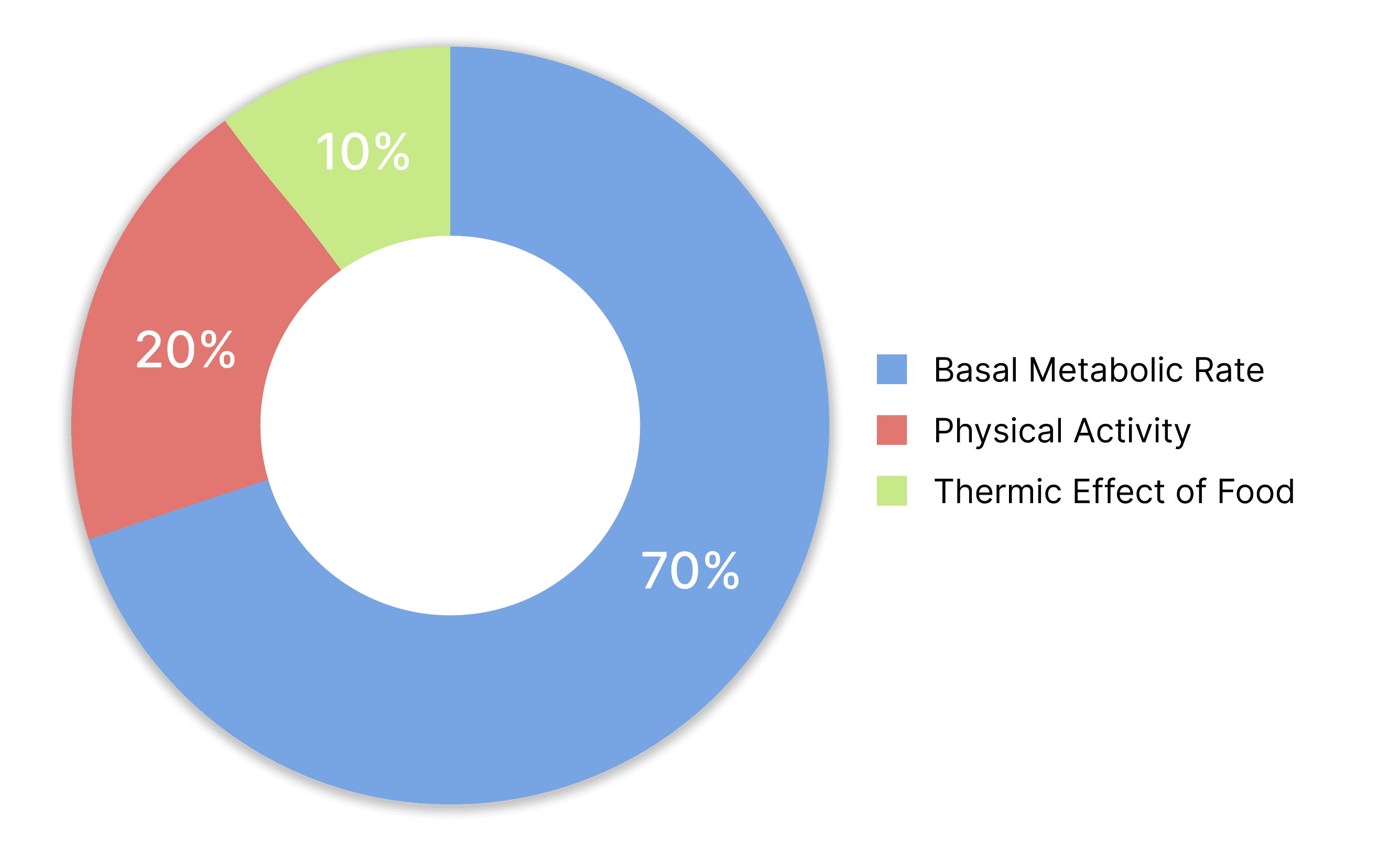
Components of TDEE
1. BMR (Basal Metabolic Rate)
BMR is the amount of energy your body needs to maintain basic functions (like breathing, heart rate, and digestion) while at rest. This is a major contributor to your TDEE.
2. Physical Activity
This represents the energy you burn through any physical activity, such as walking, exercising, or daily tasks. The energy burned depends on how active you are.
3. TEF (Thermic Effect of Food)
This refers to the energy required for digesting and processing food. Different foods have different thermic effects, with protein having the highest thermic effect compared to carbs and fats.
How is TDEE Calculated?
Mifflin-St Jeor Equation (Most Accurate for General Use)
Men: BMR = (10 × weight in kg) + (6.25 × height in cm) - (5 × age in years) + 5
Women: BMR = (10 × weight in kg) + (6.25 × height in cm) - (5 × age in years) - 161
Katch-McArdle Equation (Best for Those Who Know Body Fat Percentage)
BMR = 370 + (21.6 × lean body mass in kg)
Lean Body Mass = weight in kg × (1 - body fat percentage)
Activity Multiplication Factors
Key Features of TDEECalculator.me
Discover Your Ideal Weight Range
TDEECalculator.me helps you determine your ideal weight by analyzing your BMI and comparing estimates from formulas like Devine, Robinson, and Hamwi.
Calculate Your Maintenance Calories
Using the Mifflin-St Jeor equation by default, and Katch-McArdle when body fat is provided, the calculator estimates your daily calorie needs.
Understand Your BMI Score
The calculator automatically determines your BMI and categorizes it into health ranges with visual representations.
Explore Your Muscular Potential
Utilizing scientifically backed models like Martin Berkhan's approach to estimate your maximum natural muscle mass potential.
Macronutrient Guidance
Get tailored recommendations for maintenance, cutting, or bulking with customizable macro ratios.
Important Considerations
- TDEE is an Estimate: Individual metabolism varies, so real-world tracking is essential.
- Body Composition Matters: Formulas using body fat percentage provide better accuracy.
- Activity Level is Subjective: Choosing the right factor improves accuracy.
- Professional Guidance Recommended: Registered dietitians or trainers can provide personalized insights.
How to Use Your TDEE Result
Treat your first TDEE output as a starting target, not a fixed truth. Most people get better results by starting with the estimate for 2-3 weeks, then adjusting based on trend data.
For maintenance, keep calories near your estimate and monitor body weight trend. For fat loss, use a moderate deficit. For muscle gain, use a small surplus. After each check-in window, update calories only if trend direction is not matching your goal.
Goal-Based Starting Points
| Goal | Starting Intake | Typical Weekly Trend |
|---|---|---|
| Fat Loss | TDEE - 300 to 500 kcal/day | ~0.25% to 0.75% bodyweight loss |
| Maintenance | Around calculated TDEE | Weight mostly stable |
| Lean Gain | TDEE + 150 to 300 kcal/day | ~0.1% to 0.3% bodyweight gain |
These are practical starting ranges. Use your own 2-4 week trend to personalize.
Choosing the Right Activity Level
The activity multiplier is usually the biggest source of error. Select based on your weekly average behavior, not your best training day.
- Sedentary: Desk work and low daily movement, with little structured training.
- Light: 1-3 training sessions weekly or moderate daily walking.
- Moderate: 3-5 training sessions with generally active days.
- Heavy/Athlete: Frequent high-volume training, physically demanding lifestyle, or two-a-days.
If unsure, start one level lower and adjust from real progress data.
How Often to Recalculate
Recalculate when your body weight, activity, or body-fat estimate changes meaningfully. For most users, every 2-4 weeks is enough.
During a prolonged cut or bulk, recalculate after each 3-5% bodyweight change. This keeps targets aligned as energy needs shift.
Why Results Can Seem Off
- Activity level selected too high for normal weekly behavior.
- Inconsistent tracking of food intake, especially oils, snacks, and beverages.
- Large short-term water shifts from sodium, carbs, stress, or menstrual cycle changes.
- Rapid changes in step count or training volume that were not reflected in inputs.
- Using occasional body-fat readings as exact values instead of trend markers.
Macro Planning Notes
The macro split is flexible. Long-term progress usually depends more on calorie consistency, protein adequacy, training quality, sleep, and adherence than on perfect macro ratios.
A practical approach is to set protein first, set dietary fat to a sustainable level, and allocate the remaining calories to carbohydrates based on training demands and personal preference.
When to Seek Professional Support
Consider individualized guidance if you are managing diabetes, thyroid issues, recent major weight change, pregnancy/postpartum nutrition, or a history of disordered eating.
In these cases, formula-based estimates are still useful context, but a registered professional can help tailor safer and more precise targets.